

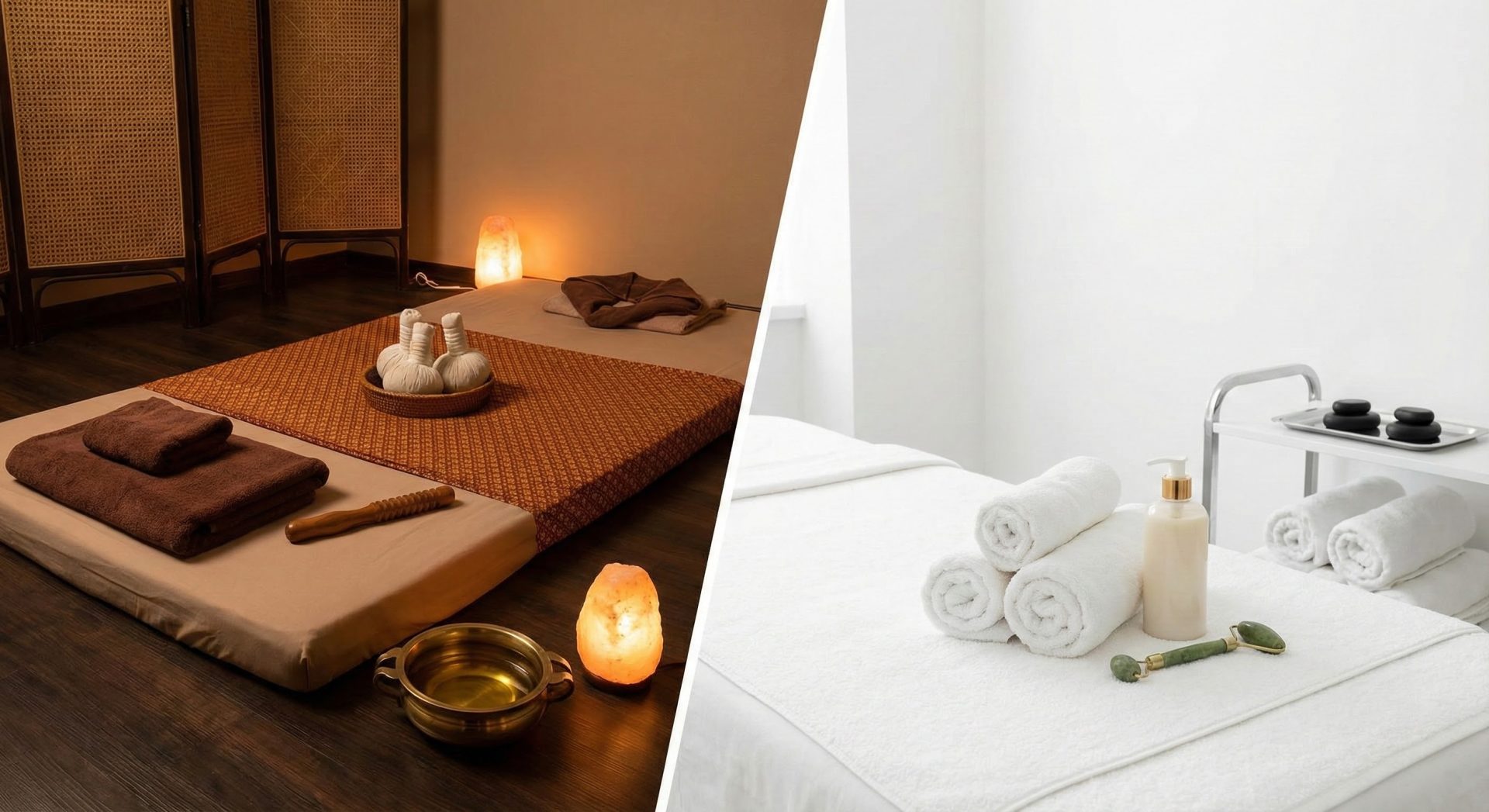
Among the various techniques and histories of massages lies a deeper significance that reflects philosophies, beliefs, and traditions. Within the massage world, there are many different forms of massage that could be performed; from deep tissue massages to Shiatsu techniques, these diverse methods strive towards a common goal of promoting the utmost relaxation and rejuvenation. When observing alternative approaches, the massages are most frequently categorized as Eastern and Western massage techniques. According to an article called “History of Massage Therapy” from Natural Healers, they state, “Civilizations in the East and West found that natural healing and massage could heal injuries, relieve pain, and prevent and cure illnesses. What’s more, it helped reduce stress and produce deep relaxation” (Natural Healers). Because they also have separate beliefs, techniques, and traditions, it is easy to decipher the difference between the two. As we dive into each origin, it’s crucial to understand how cultures impact the key foundations that a massage stands for, as well as their goals behind the practice.
Eastern Massage Techniques
Many individuals turn towards the idea of Eastern massage techniques primarily because of the goals and purposes that it targets. Eastern practices typically originate among Asian countries, such as China, Japan, India, and Thailand. Within each country lies particular massage techniques associated with each culture, representing their values and philosophies. To sum it up, Eastern massage practices tend to focus on energy flow, body balance, rhythm, and meditation. According to Kengi Omori Massage, “Eastern massage therapies are deeply intertwined with traditional Eastern philosophies, which view the body and mind as interconnected components of a unified whole. This perspective emphasizes the flow of vital energy—known as “Qi” in Chinese culture or “Prana” in Indian traditions—throughout the body” (pm). Rather than attempting to reduce muscle tension and chronic pain, Eastern techniques instead focus on inner peace, sense of being, and spiritual belonging. They also state that “Eastern practitioners employ diagnostic methods that assess the body’s overall energy balance” (pm). By incorporating massage and these various concepts together, it creates a refreshing and restorative body and soul.
Looking into the different Eastern techniques, the most popular ones include the Shiatsu (Japanese), Thai massage, and Tui Na, which originated from China. Amongst these different techniques, they each target a different result, such as improved stretching, acupuncture, and balance. Each technique embodies distinct approaches and objectives worth considering individually.
- Shiatsu Technique
This Japanese massage technique is best known for its pressure to acupoints, using fingers, elbows, hands, and more. Shiatsu stands for “finger pressure” in Japanese, indicating that pressure points and acupuncture is involved. While it originated in Japan, it has spread internationally to other countries as well, including Europe and the Americas. Shiatsu massage is most likely turned to for someone with insomnia, pain, and injuries. According to an article from Biomed Central, the authors write, “…to generate hydrostatic pressure that modulates fluid distribution dynamics, metabolic processes, and respiratory mechanics, with gravitational force reduction minimizing joint loading, enhancing postural flexibility, and improving clinical outcomes in the management of muscular injuries, musculoskeletal pathologies, and stroke rehabilitation…” (Yao et. al). By incorporating flowing, rhythmic movements, holistic approaches, and pressure, the Shiatsu Japanese massage technique is beneficial for those faced with stress, anxiety, loss of sleep, and poor immune systems.
- Thai Massage
The Thai massage, also known as Nuad Boran, is a massage technique that primarily focuses on stretching, rhythm, and acupuncture. It is similar to the Shiatsu technique, but it originated in Thailand, and its ideas were influenced by Indian and Chinese factors. Taking advantage of the thumbs, it is used to push down on acupuncture points and rubbing in circular motions to promote blood circulation and growth. The same article from Biomed Central describes, “Therapeutic Thai acupressure involves applying pressure with the thumbs onto specific acupoints located along meridian lines, with the pressure tailored to each recipient’s pain threshold to ensure both comfort and efficacy” (Yao et. al). The main purpose of this form of massage is to reduce muscle tension. This sounds similar to Western massage techniques, as they are specialized with reducing tension and tightness. Understanding how Thai massage is different than traditional Western massage is important, as various key aspects and goals come into play.
- Tui Na
Finally, Tui Na is a traditional Chinese massage that channels body muscles and energy channels, also known as meridians. The main goal of this massage is to reduce stress, joint pain, and any other forms of discomfort or unease. According to an article called “Potential Benefits of Tuina Massage” from Healthline, they write, “It’s based on the theory that imbalances of qi, which is the body’s vital life force or energy, can cause blockages or imbalances that lead to symptoms such as pain and illness” (Tom Rush and Emily Cronkleton). Tui Na is one of four main Chinese massage practices, focusing on the physical and emotional wellbeing of individuals, as well as creating balance within the body and mind. Rather than promoting physical relaxation, Tui Na turns towards healing the inner soul more prominently, fostering calmness and piece of mind.
There are far more Eastern massage techniques than the three mentioned above, but the general idea is that these approaches prioritize the soul, body, and balance the most. While it still boosts other factors like stress and tension, the key goals are to facilitate harmonized energy, flexibility, and wellbeing.
Western Massage Techniques
Western massage techniques are not completely different from Eastern. Rather than focusing on what’s occurring spiritually and holistically, it targets more physical factors, like chronic pain, tension, and injuries. At Cloud 9 Foot Spa, we offer these Western approaches more, through our deep tissue and Swedish massages. Through improving blood circulation and decreasing muscle tension, Western techniques strive to enhance motion and relaxation while demoting stress, tension, and pain. Being able to differentiate the two categories is important towards understanding how different massage techniques work.
- Deep Tissue Massage
Deep tissue massages are most often requested by individuals who suffer chronic tension, pain, and injury. It is common among athletes, as they typically undergo sports injuries or knots. According to an article from Healthline, they describe what a deep tissue massage is and how it is performed. “Deep tissue massage is a massage technique that’s mainly used to treat musculoskeletal issues, such as strains and sports injuries. It involves applying sustained pressure using slow, deep strokes to target the inner layers of your muscles and connective tissues. This helps to break up scar tissue that forms following an injury and reduces tension in muscle and tissue” (Santos Long-hurst). Through specific strokes and kneading, deep tissue massages are best promoted for relieving ache and soreness.
- Swedish Massage
Swedish massages, on the other hand, prioritize relaxation and rejuvenation the most. They are turned to when individuals want to relax and escape from the outside world. Focusing on inner growth, circulation, and mental stress levels, this form of massage highlights the connection between physical touch and emotional well-being, providing a restorative experience for the body and mind. An article called “What Is a Swedish Massage” from Web MD writes, “This type of massage involves actions like percussion, kneading, vibration, tapping and rolling” (Web MD Editorial Contributor). Through these techniques, it best enforces serenity and mindfulness, resulting in a healed soul and peaceful mind.
Being able to understand the difference between Eastern and Western massage techniques is critical, especially when it comes to choosing what type of service is best for you. Whether you want to focus on balance and rhythm, or relieving pain and aches, these various styles could accommodate your needs. At Cloud 9 Foot Spa, we offer Western styled massages through our deep tissue and Swedish massage services, but nonetheless, we still target the goals that Eastern practices believe in, such as movement, flexibility, and energy flow.
Not every type of massage is for everyone, but through exploration and trial and error, it is inevitable for individuals to find the service best fit for their body and needs. Whether someone seeks relief from chronic pain, mental clarity, or simply a moment of stillness, each modality offers its own unique benefits. The key is staying open to the process—listening to how your body responds and allowing your preferences to evolve. In time, what once felt unfamiliar can become an essential part of your self-care routine.
Author: Jolyn Lai
Works Cited
Cronkleton, Emily. “10 Benefits of Chinese Tuina Massage.” Healthline, Healthline Media, 17 Apr. 2019, www.healthline.com/health/tuina.
Natural Healers. “History of Massage Dates Back over 5,000 Years.” Natural Healers, 12 Oct. 2016, www.naturalhealers.com/blog/history/.
pm. “Kenji Omori Massage Therapy.” Kenji Omori, 3 Mar. 2025, kenjiomorilmt.com/eastern-vs-western-massage-understanding-the-philosophical-differences/. Accessed 3 Aug. 2025.
Santos-Longhurst, Adrienne. “Is a Deep Tissue Massage What Your Muscles Need?” Healthline, Healthline Media, 13 Dec. 2018, www.healthline.com/health/deep-tissue-massage.
WebMD Editorial Contributor. “What Is a Swedish Massage?” WebMD, 2 July 2023, www.webmd.com/balance/what-is-a-swedish-massage.Yao, Chongjie, et al. “Acupoint Massage: A Comprehensive Descriptive Review of Its Forms, Applications, and Underlying Mechanisms.” Chinese Medicine, vol. 20, no. 1, 23 Apr. 2025, https://doi.org/10.1186/s13020-025-01105-1.